
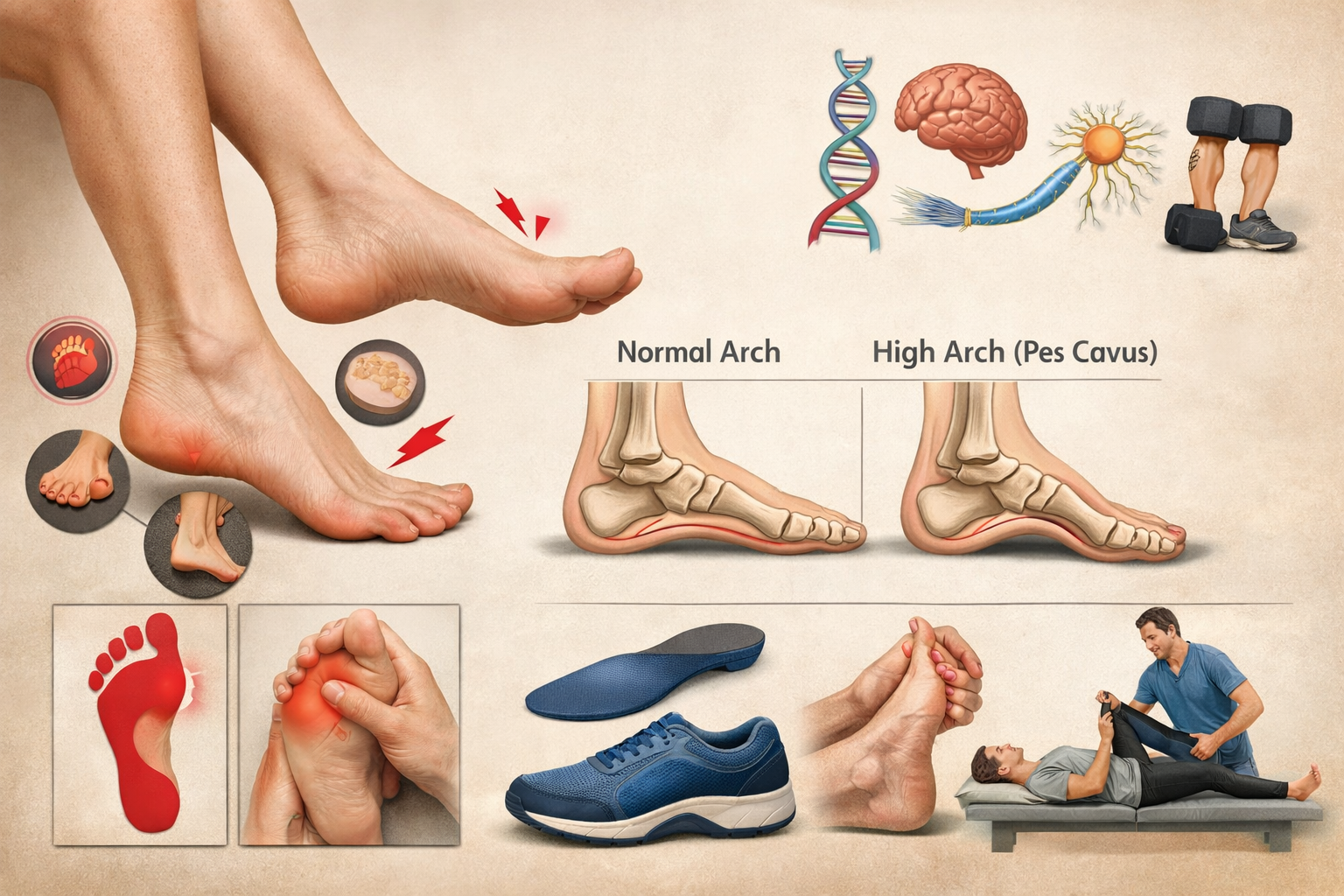
When most people think about foot problems, they imagine flat feet or plantar fasciitis. But there’s another common,(and often overlooked) foot type that can lead to pain, imbalance, and other issues: high arches, medically known as pes cavus.
What Are High Arches?
High arches occur when the arch of the foot is raised more than normal. This means that when you stand, much of your body weight is placed on the ball of your foot and your heel, rather than being distributed evenly across the entire foot.
Unlike flat feet, which make the entire sole of your foot contact the ground, high-arched feet create an exaggerated curve in the middle of the foot.
Common Signs & Symptoms
People with high arches may experience:
- Foot pain under the ball of the foot or heel
- Ankle instability or frequent sprains
- Calluses on the ball or heel from excess pressure
- Arch pain or tightness
- Trouble finding comfortable shoes that fit well
Sometimes high arches don’t cause symptoms at all—but when they do, they can affect your balance and gait because the foot isn’t absorbing shock evenly.
What Causes High Arches?
High arches can arise from a variety of factors:
- Genetics: Some people naturally develop high arches due to inherited foot structure.
- Neuromuscular conditions: Certain neurologic disorders (like Charcot-Marie-Tooth disease) can influence foot shape.
- Injury: Trauma to the foot or ankle may alter foot alignment over time.
- Postural and gait patterns: Chronic imbalances in weight distribution can accentuate arches.
How High Arches Can Affect Your Feet
High arches change how your feet handle everyday forces. Because weight isn’t evenly distributed:
- Shock absorption is reduced, increasing stress on joints and soft tissues.
- You’re more prone to ankle sprains and instability.
- Over time, metatarsal pain (pain behind the toes) can become chronic.
- You may develop calluses or corns in pressure points.
Even if you don’t feel pain now, ignoring the mechanics of a high-arched foot can lead to problems down the line.
What You Can Do About It
Here’s how Impression Foot and Ankle can help you manage high arches:
– Custom Orthotics
Everyone’s feet are different. Custom orthotics are designed to redistribute pressure more evenly, support the arch, and reduce pain caused by high arches.
– Proper Footwear
Shoes with good cushioning, a stable sole, and adequate arch support help absorb impact and improve balance. Avoid overly rigid or minimalist shoes if they increase discomfort.
– Targeted Exercises
Stretching and strengthening exercises can improve foot function. For example:
- Calf stretches to manage tight calf muscles
- Foot intrinsic strengthening (like towel scrunches)
- Balance exercises to help with stability
Professional Evaluation
Because high arches can influence gait and alignment, a professional exam ensures that any secondary issues—like ankle instability or joint pain—are addressed early.
When to See a Podiatrist
If you’re experiencing persistent foot pain, frequent ankle injuries, or discomfort when walking or exercising, don’t wait. Early assessment allows Impression Foot and Ankle to create a tailored plan that focuses on comfort, function, and long-term foot health.
Takeaway: High arches are a common structural foot type that can contribute to pain and mobility issues, but with the right support, footwear, and care plan, you can stay active comfortably. If high arches are affecting your quality of life, Impression Foot and Ankle is here to help you every step of the way.